 |
|  |
|  |
|  |
| 
E-mail: kobol@jfbathroom.com

Tel: (86)768-2992129


NEWS CENTER
—
How to Choose a Reliable Ceramic Sanitary Ware Manufacturer in China: 5 Red Flags to Avoid
Sourcing ceramic sanitary ware from China offers unparalleled advantages in scalability, cost-efficiency, and design innovation. However, for international B2B buyers, distributors, and project managers, navigating a market with thousands of suppliers can be a high-stakes challenge. A single misstep in choosing a supplier can lead to unsellable inventory, severe customs delays, or catastrophic after-sales claims that destroy your brand’s reputation. To secure a high-performing supply chain, you must look beyond attractive price tags and glossy catalogs. Drawing from our extensive manufacturing heritage at Joy & Fortune, this comprehensive guide uncovers the critical geographic and technical realities of Chinese ceramic production, outlining the five major red flags you must avoid to partner with a truly reliable, compliant, and transparent OEM.
Decoding the Chinese Ceramic Sanitary Ware Manufacturing Landscape
Understanding China' s Primary Ceramic Production Hubs
When sourcing ceramic sanitary ware from China, geography dictates quality, technology, and pricing. Production is concentrated in three primary hubs, each with distinct specializations.
l Chaozhou: The largest cluster, excelling in high-volume capacity and cost-effective manufacturing, driven by an extensive local supply chain.
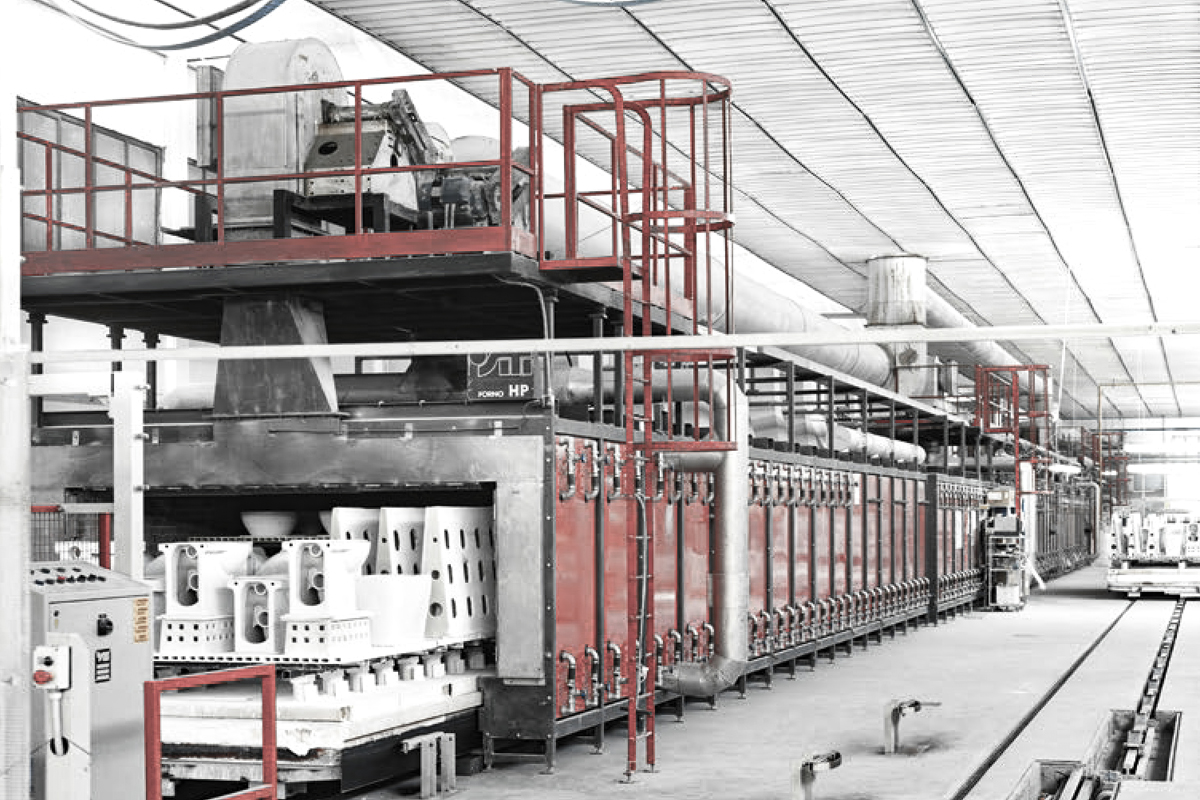
l Foshan: Serves the premium market, utilizing advanced automated tunnel kilns and high-pressure casting to meet strict Western aesthetic and structural standards.
l Tangshan: Dominates the northern sector, recognized for heavy-duty vitreous china and industrial-grade structural fixtures.
For international B2B buyers, choosing the right hub is critical: it aligns your target budget and regulatory requirements directly with a region’s specialized manufacturing infrastructure.
Differentiating Between Factory-Direct Manufacturers and Trading Companies
Distinguishing between a true original equipment manufacturer (OEM) and a trading company is vital for securing factory-direct pricing and technical accountability. Middlemen often pose as factories but lack the infrastructure to support custom engineering.
To identify an authentic manufacturer, evaluate three parameters:
l Product Focus: Real factories specialize strictly in vertical ceramic production (such as vitreous china toilets and washbasins), whereas trading companies offer broad, mismatched catalogs.
l Scale & Machinery: Genuine OEMs operate extensive facilities—often exceeding 20,000 square meters—housing automated tunnel kilns and pressure-testing labs.
l Certification Ownership: Ensure export compliance certificates (cUPC, CE, WaterMark) are issued directly to the factory name.
Direct factory partnerships guarantee transparent quality control and stable B2B pricing.
Aligning Factory Capabilities with Target Market Regulations
A manufacturer’s reliability depends heavily on their regulatory alignment with your target market. Exporting ceramic sanitary ware requires strict compliance with regional standards, which fundamentally alters product engineering from day one.
Different regions mandate specific technical benchmarks:
l North America: Demands cUPC certification.
l Europe: Mandates the CE mark.
l Australia: Requires WaterMark compliance.
These certifications dictate precise physical specifications, such as specific U-shaped tank openings for Australian plumbing or ADA-compliant 46cm rim heights for the US market. Partnering with a factory that already holds these active credentials ensures their raw materials and production lines are pre-verified, eliminating costly re-engineering delays and protecting your business from customs border seizures.

The 5 Critical Red Flags to Avoid When Vetting Suppliers
Red Flag 1: Absence of International Compliance Certifications (cUPC, CE, WaterMark)
The absolute biggest red flag when vetting a Chinese ceramic manufacturer is the absence of active international compliance certifications. For B2B buyers targeting premium global markets, verified credentials like cUPC for North America, the CE mark for Europe, and WaterMark for Australia are non-negotiable.
If a factory hesitates to provide these certificates, or if the registration matches a third-party trading company rather than the production facility itself, walk away. Missing certifications indicate the products have skipped mandatory testing for water absorption, structural load-bearing capacity, and flushing efficiency. Importing uncertified sanitary ware risks costly customs border seizures, legal liabilities, and local plumbing code violations that can destroy your brand's reputation overnight.
Red Flag 2: Visible Surface Flaws and Inconsistent Ceramic Glazing
Inconsistent glazing and visible surface defects are immediate signs of poor firing control and low-grade raw materials. High-end ceramic fixtures require a uniform, high-density glaze layer fired at precisely regulated high temperatures to achieve a perfectly vitrified, non-porous finish.
When evaluating factory samples, watch out for structural flaws like pinholes, 'orange peel' textures, or micro-cracks. These are more than cosmetic blemishes; uneven glaze compromises the product’s core hygiene and durability. Over time, thin or poorly fired glazing absorbs water, leading to bacterial buildup, deep staining, and structural cracking under pressure. A factory that permits these surface imperfections lacks the strict kiln regulation required for premium international markets.
Red Flag 3: Vague or Missing 5-Step Quality Control (QC) Protocols
A reliable ceramic manufacturer must provide documented evidence of a rigorous, multi-stage inspection process. A major red flag is a supplier who offers vague explanations instead of a structured 5-step QC protocol.
For high-end ceramic sanitary ware, this protocol must strictly verify physical and functional integrity before shipping. Always demand verified data for specific tests:
l Water absorption rates: Must remain below 0.5% to ensure true vitreous china vitrification.
l Functional performance: Including vacuum flushing efficiency, structural load-bearing limits, and comprehensive leak detection.
If a manufacturer cannot provide real-time testing logs or clear batch tracking, they are likely skipping vital checkpoints to cut costs, inevitably leading to high defect rates and costly after-sales claims.

Red Flag 4: Bids and Quotes Significantly Below the Market Average
An unrealistically low bid is an immediate warning sign. In ceramic manufacturing, extreme price cuts always compromise structural integrity. Sub-market pricing typically indicates that the factory is cutting corners on raw materials—using low-grade clay—or shortening firing times in the kiln.
This results in poorly vitrified ceramics with high water absorption rates, making the fixtures prone to cracking, staining, and odor retention. Furthermore, ultra-low quotes often mean the manufacturer skips critical high-pressure testing or substitutes reliable internal flushing mechanisms with cheap, unbraced components. In the B2B sanitary ware industry, saving upfront on a cheap quote invariably leads to catastrophic after-sales replacement costs and damaged brand reputation.
Red Flag 5: Reluctance to Allow On-Site Factory Audits or Third-Party Inspections
A reputable manufacturer operates with absolute transparency. If a supplier delays, discourages, or flatly refuses on-site factory audits or independent third-party inspections, it is a massive warning sign. This reluctance usually indicates they are hiding critical operational weaknesses, such as outsourced production to unverified lower-tier workshops, substandard working conditions, or a total lack of consistent quality control.
Authentic OEMs welcome live video walkthroughs and independent inspectors (such as SGS or TÜV) to verify their kiln capacities and assembly lines. A supplier blocking external eyes is an immediate signal to halt negotiations; transparency is non-negotiable for a secure, long-term B2B partnership.
Technical Verification Strategies for B2B Sanitary Ware Buyers
Evaluating Production Infrastructure: Tunnel Kilns vs. Shuttle Kilns
When vetting a manufacturer, the kiln type is a primary indicator of production stability and capacity. High-end ceramic sanitary ware requires the consistent thermal environment provided by automated tunnel kilns. These kilns maintain continuous, precise temperature profiles, ensuring that every piece achieves deep vitrification and a flawless finish.
In contrast, rely less on shuttle kilns, which, while flexible for small batches, often suffer from thermal gradients that lead to uneven glaze thickness and micro-structural stress. For B2B buyers requiring consistent, large-scale output for international projects, prioritizing factories with integrated tunnel kiln infrastructure and high-pressure casting systems guarantees the uniform structural load-bearing capacity and dimensional accuracy essential for premium sanitary ware.
Testing Internal Mechanisms and Water Pressure Adaptability
Beyond the ceramic shell, a fixture's reliability depends entirely on its internal mechanics and global water pressure adaptability. When evaluating modern split or smart toilets, B2B buyers must scrutinize the flushing valves and internal components. Inferior mechanisms fail under fluctuating plumbing dynamics, causing chronic leaks or weak flushes.
For high-rise residential installations or low-pressure municipal zones, prioritize manufacturers utilizing premium, pre-tested flushing systems or specialized integrated water tanks. These integrated engineering designs stabilize water force internally, ensuring a powerful, consistent flush regardless of building height or external plumbing limitations. Verifying these internal components during your technical audit prevents costly after-sales plumbing failures and warranty claims in your target markets.
Best Practices for Establishing a Secure, Long-Term Manufacturing Partnership
Structuring Bulletproof Quality Agreements and Warranty Terms
A secure long-term B2B partnership relies on a legally binding Quality Agreement (QA) that eliminates ambiguity. Buyers must define precise acceptable quality limits (AQL)—specifying zero tolerance for critical functional defects like internal leaks or micro-cracks, and strict percentage thresholds for minor cosmetic surface flaws.
Furthermore, the contract must explicitly outline the manufacturer's financial accountability for defective batches, detailing who covers the cost of replacement cargo, international ocean freight, and customs duties. Finally, establish clear B2B warranty periods—typically 5 to 10 years for vitrified ceramic structures and 1 to 2 years for internal mechanical components—backed by swift, documented compensation protocols to safeguard your import business from unexpected after-sales financial liabilities.
Mitigating Supply Chain Risks and Fragile Cargo Transit Damage
Vitrified ceramic sanitary ware is highly vulnerable to micro-fractures during long-distance maritime transit. To protect your investment, packaging protocols must be strictly standardized in your procurement contract.
Demand ISTA-certified drop-tested packaging, multi-layered corrugated boxes, and thick internal polyethylene foam molds contoured to the product’s specific geometry. For large-scale B2B shipping, mandate heavy-duty wooden palletization with tight plastic shrink-wrapping to stabilize the cargo against sea-container vibrations and rough forklift handling.
A reliable manufacturer will proactively reinforce high-stress load areas—such as washbasin rims or toilet bases—ensuring your fragile inventory arrives entirely intact at destination warehouses, eliminating costly shipping insurance disputes and sudden supply chain bottlenecks.
Selecting the right ceramic sanitary ware manufacturer in China requires a strategic balance of geographic insight, technical verification, and strict quality enforcement. By actively avoiding uncertified suppliers, identifying surface glazing flaws, demanding documented 5-step QC protocols, and rejecting sub-market pricing, you protect your business from costly product failures and structural vulnerabilities. A truly reliable OEM partner does not just sell a product; they welcome third-party audits, invest in high-efficiency automated tunnel kilns, and stand behind comprehensive B2B warranties—core operational standards that define our production philosophy at Joy & Fortune. Use these vetting strategies to eliminate supply chain risks, or connect with the Joy & Fortune team today to safeguard your international projects and build a profitable, long-term manufacturing partnership.
Related news
-

What are the best toilet brands for reliability, durability, and budget?
Few fixtures in your home work harder or impact your daily comfort more than the
-
How do I measure my old toilet to make sure the new replacement fits perfectly
Upgrading your bathroom with a modern fixture should be an exciting renovation—n
-
What does "toilet rough-in" mean, and how do I measure mine in 2 minutes?
A toilet rough-in is the clearance distance measured from the finished wall behi
-
Why are cheap bathroom vanities so cheap? Hidden traps like low-grade particle board and missing tops.
At first glance, an ultra-low price tag on a brand-new bathroom vanity feels lik
-
Big-box home store vs. online discount retailers: Where do you get the best deal on bathroom vanities?
Upgrading your bathroom vanity is one of the most impactful choices in any renov
-
What are standard bathroom vanity sizes, and how do I pick the right width for my space?
Choosing the right bathroom vanity size is one of the most critical decisions in




Premium sanitary ware manufacturer since 1992. Delivering reliable global B2B solutions.


Contact
Address: No. 12, Guayuan East Road, Changmei Second Village, Fengxi District, Chaozhou City, Guangdong Province, China
Email: kobol@jfbathroom.com
WhatsApp/Tel: [+86-135-3399-8998]
Working Hours: Mon - Sat: 9:00 AM - 6:00 PM (UTC+8)
Copyright © 2026 Joy&Fortune Ltd. All Rights Reserved.


