 |
|  |
|  |
|  |
| 
E-mail: kobol@jfbathroom.com

Tel: (86)768-2992129


NEWS CENTER
—
Why Do Some Ceramic Toilets Flush Better Than Others?

We’ve all been there—that heart-sinking moment of suspense after you press the handle, watching the water rise instead of recede. While most people spend hours picking the perfect aesthetic for their bathroom 'throne,' few stop to consider the internal engineering that actually does the dirty work.
If you’ve ever wondered why a high-end ceramic toilet in a hotel seems to handle anything you throw at it while your home model struggles with the basics, the answer isn’t just water volume. It’s hidden deep within the porcelain. The secret to a superior, clog-free experience lies in the trapway—the invisible 'S-curve' that dictates the physics of every flush.
In this guide, we’re going under the hood (or rather, under the bowl) to explore how trapway diameter, glazing quality, and advanced flushing systems work together. Whether you’re tired of the plunger or shopping for a bathroom renovation, here is everything you need to know about what makes a toilet truly high-performance.
The Anatomy of a Powerful Flush: It's All in the Trapway
Have you ever wondered why the toilet in your master bathroom requires a plunger every other week, while the one in your guest bathroom handles everything with a single, satisfying whoosh? The secret isn’t magic—it’s plumbing geometry. While most buyers focus on the bowl shape or the water tank, the true unsung hero of a ceramic toilet is hidden beneath the surface: the trapway.
Understanding the anatomy of the trapway is the first step to ensuring you never have to deal with a weak flush or a stubborn clog again.
What Exactly is a Toilet Trapway?
If you look closely at the base of a traditional ceramic toilet, you will notice a curved, snake-like channel molded into the porcelain. This is the trapway.
In simple terms, a toilet trapway is the internal plumbing channel that connects the toilet bowl to your home's main waste line. It serves three vital functions in your bathroom:
l Waste Evacuation: It acts as the direct highway for water and waste to exit the bowl.
l The Siphon Effect: The specific curve of the trapway creates the vacuum-like 'siphon' action that physically pulls waste out of the bowl during a flush.
l Sewer Gas Barrier: The dip in the trapway naturally holds a small amount of water at all times. This water seal acts as a physical barrier, preventing dangerous and foul-smelling sewer gases from rising out of the plumbing and into your home.
How Trapway Diameter Affects Flushing Speed
When it comes to toilet trapways, size absolutely matters. The diameter of this channel is one of the biggest determining factors in how well a toilet flushes and how resistant it is to clogging.
l The Industry Standard: Most standard, older toilets feature a trapway diameter of 2 inches. While this passes basic manufacturing regulations, it is often the baseline for frequent clogs, especially in households dealing with high volumes of toilet paper.
l The High-Performance Upgrade: Modern, high-efficiency ceramic toilets often feature enlarged trapways ranging from 2 1/8 inches to 2 3/8 inches (and sometimes even larger in commercial models).
An extra fraction of an inch might not sound like much, but mathematically, it significantly increases the overall volume capacity of the pipe. A wider diameter allows a larger mass of water and waste to pass through simultaneously, increasing the flushing speed and drastically reducing the friction that leads to blockages.
The Crucial Difference Between S-Trap and P-Trap Designs
Not all trapways route waste in the same direction. Depending on the age of your home and your geographic location, your ceramic toilet will utilize one of two primary trapway designs: the S-Trap or the P-Trap.
The S-Trap (Floor Exit)
l Shape: Shaped like the letter 'S'.
l Function: Routes waste directly down through the floor and into the foundation's plumbing.
l Usage: This is the most common design in the United States and is typically found in traditional residential homes. Because gravity pulls the water straight down, S-traps often deliver a very powerful, gravity-assisted siphon.
The P-Trap (Wall Exit)
l Shape: Shaped like a sideways letter 'P'.
l Function: Routes waste horizontally out through the wall behind the toilet rather than the floor.
l Usage: Highly common in European plumbing, modern high-rise apartments, and wall-mounted (floating) toilets. While P-traps save floor space and make cleaning easier, they require precise engineering to ensure the horizontal exit maintains enough water pressure to clear the trapway efficiently.
Choosing the right toilet means knowing which trapway design your bathroom's plumbing is built to handle, as they are rarely interchangeable without major renovation!
Glazing and Material: The Secret to a Smooth Exit
If the trapway is the 'highway' of your toilet, then the finish of that highway determines whether traffic moves at 70 mph or stays stuck in a permanent jam. Many homeowners assume that all ceramic toilets are identical because they look the same on the outside. However, the internal 'skin' of the trapway—the part you can't see—is where the real performance difference lies.
Why Fully Glazed Trapways Are Essential for Clog Prevention
One of the most significant indicators of a premium toilet is a fully glazed trapway. During the manufacturing process, a liquid glass coating (glaze) is applied to the ceramic before it is fired in the kiln.
l The Friction Factor: Raw, unglazed ceramic is naturally porous and sandpaper-rough. Without a glaze, waste and toilet paper encounter significant friction, which can cause them to snag and accumulate.
l The 'Non-Stick' Advantage: A fully glazed trapway creates a glass-smooth surface. This reduces surface tension, allowing water and waste to glide through the curves of the trapway with zero resistance.
The Visual Trap: Beware of 'economy' models. Some manufacturers only glaze the visible parts of the bowl and leave the internal trapway raw to save costs. Always look for '100% Fully Glazed Trapway' in the product specifications to ensure long-term clog resistance.
The Impact of High-Quality Ceramic Firing on Water Flow
The strength and smoothness of a toilet are dictated by the temperature of the kiln. Most high-performance toilets are made of Vitreous China, which is ceramic treated with a specialized glaze and fired at incredibly high temperatures (usually above 1,200°C).
High-quality firing impacts flushing in two ways:
l Structural Integrity: High heat creates a denser, harder material that won't warp. A warped trapway—even by a few millimeters—can disrupt the delicate physics of the siphon, leading to a weak 'lazy' flush.
l Zero Absorption: Properly fired Vitreous China has a near-zero absorption rate. This means the ceramic won't soak up water or odors over time, preventing the material from degrading or becoming 'pitted' from the inside out.
How Hidden Micro-Scratches Hinder Waste Removal
Even a well-glazed toilet can lose its 'flushing edge' if the glaze quality is poor. Over time, low-grade glazes can develop micro-scratches—tiny fissures that are invisible to the naked eye but act like 'teeth' for waste.
l The Biofilm Build-up: These scratches become breeding grounds for bacteria and mineral deposits (limescale). As these deposits grow, they create a bumpy surface that slows down the water velocity.
l Chemical Sensitivity: Cheap glazes are more susceptible to damage from harsh chemical cleaners. Once the protective glass layer is etched by acid or abrasives, the trapway loses its smoothness permanently.

Flushing Systems That Maximize Trapway Efficiency
A perfectly glazed, wide-diameter trapway is only half the battle. To achieve flawless, clog-free performance, the trapway needs a catalyst—a flushing mechanism capable of driving water and waste through those curves with maximum velocity. The structural design of the ceramic must work in perfect harmony with the toilet's 'engine.' Let's look at how modern flushing technologies maximize trapway efficiency.
Siphon Jet Technology and Trapway Synergy Explained
If you look at the very bottom of a modern toilet bowl, pointing directly toward the trapway opening, you will usually see a small, secondary hole. This is the siphon jet, and it is a game-changer for trapway efficiency.
l The Mechanism: When you flush, water doesn't just pour down from the rim. A large portion of it is channeled directly into the siphon jet.
l The Synergy: This jet acts like a high-powered water cannon, blasting a concentrated stream directly into the trapway. This rapid injection of water immediately purges the air from the pipe, jumpstarting the vacuum (siphon) effect fractions of a second faster than gravity alone could achieve.
Toilets equipped with siphon jets can clear heavier waste loads through standard-sized trapways simply because the initial force overcomes friction instantly, leaving a clean bowl behind.
Gravity-Fed vs. Pressure-Assisted: Which Clears the Trapway Faster?
When it comes to raw speed and force through the trapway, the debate usually comes down to the two most popular flushing engines on the market.
Gravity-Fed Toilets
l How It Works: As the name suggests, these rely on the weight and gravitational pull of the water dropping from the tank into the bowl.
l Trapway Impact: Gravity-fed systems require a highly optimized, fully glazed trapway to work well because the water pressure is relatively gentle. They are quieter and easier to repair, but if the trapway is narrow or rough, they are more prone to clogging.
Pressure-Assisted Toilets
l How It Works: These feature a sealed pressure tank inside the main ceramic tank. As water fills the tank, it compresses the air inside. When you flush, that compressed air violently blasts the water into the bowl.
l Trapway Impact: Pressure-assisted models clear the trapway significantly faster. The sheer velocity of the water forcefully scours the trapway walls, making clogs virtually impossible. While they are louder, they are the ultimate solution for homes that struggle with frequent plumbing blockages.
How Dual-Flush Mechanisms Balance Water Volume and Power
Modern plumbing is highly focused on water conservation, leading to the rise of dual-flush mechanisms. These systems typically offer a half-flush for liquid waste (around 0.8 to 1.0 GPF - Gallons Per Flush) and a full flush for solid waste (usually 1.28 or 1.6 GPF).
Designing a trapway for a dual-flush toilet is an engineering tightrope. The trapway must be:
l Wide enough to prevent solid clogs during the 1.6 GPF full flush.
l Hydrodynamic enough to create a successful siphon using a fraction of the water during the 0.8 GPF half-flush.
This balance is why trapway glazing and internal geometry are so critical in eco-friendly models. Without a frictionless trapway, the lower water volume of a dual-flush system simply wouldn't have enough momentum to carry waste up and over the trapway's apex.
Choosing the Best Ceramic Toilet for Your Space
You now know that the secret to a high-performing toilet lies in a fully glazed, wide-diameter trapway paired with a powerful flushing engine. However, even the most technologically advanced ceramic toilet will fail if it isn't properly suited for your specific bathroom. Before you make a purchase, you need to ensure the toilet's plumbing architecture aligns with your home's physical space and local building codes.
Measuring Your Bathroom's Rough-In for Trapway Compatibility
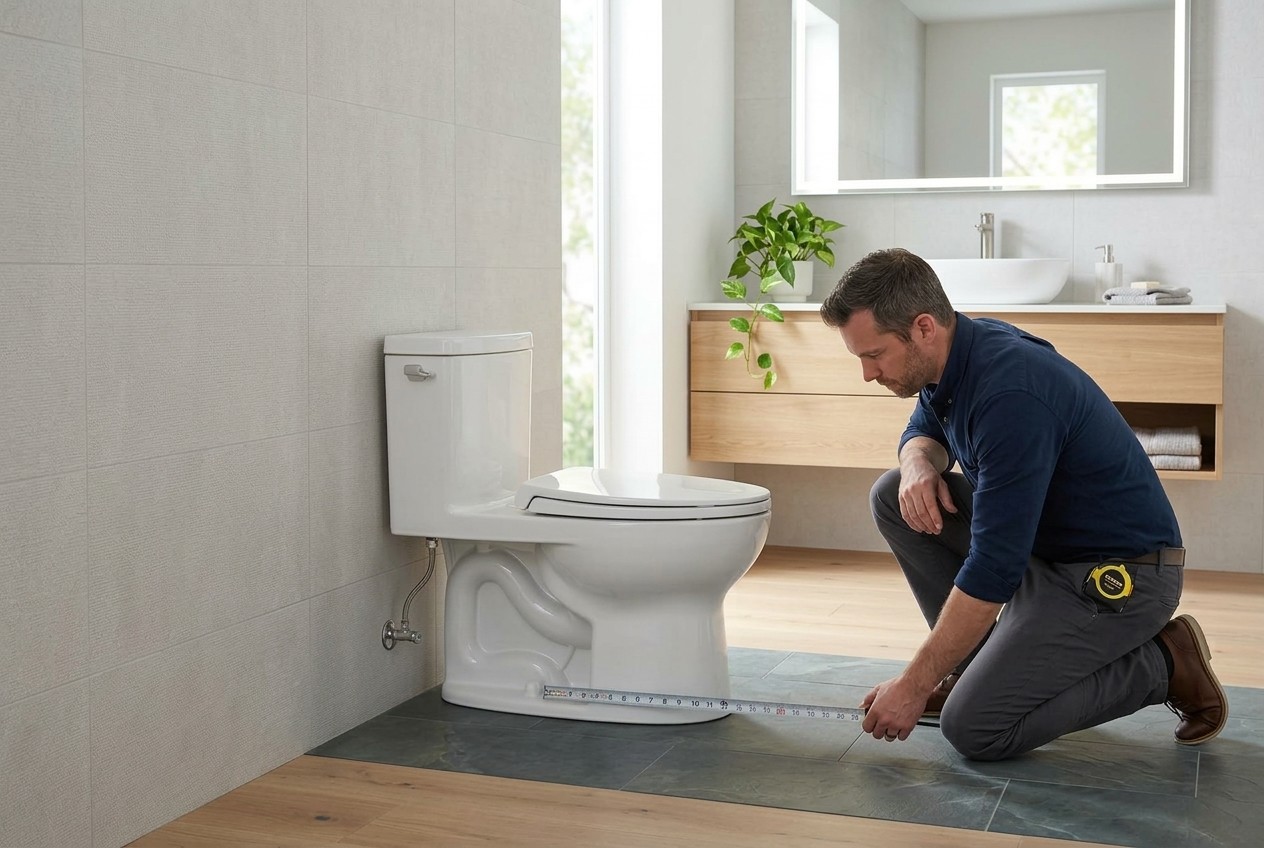
Simply take a tape measure and measure the distance from the finished wall (not the baseboard) behind the toilet to the center of the closet bolts (the caps holding the toilet to the floor).
l 12-Inch Rough-In: This is the standard measurement for the vast majority of modern homes. Most toilets on the market are built with trapways engineered for a 12-inch clearance.
l 10-Inch and 14-Inch Rough-Ins: Commonly found in older homes or custom builds. You will need to specifically search for toilets designed to accommodate these dimensions to ensure the trapway lines up perfectly with the floor flange.
Navigating WaterSense Certifications and Local Regulations
As water conservation becomes a global priority, plumbing regulations have evolved. You can no longer buy the 3.5 GPF (Gallons Per Flush) water-guzzling toilets of the past. Today, the trapway must perform flawlessly using significantly less water.
l EPA WaterSense Certification: To earn a WaterSense label, a toilet must use 1.28 GPF or less and pass rigorous solid waste removal tests. A highly engineered, fully glazed trapway is an absolute necessity for these toilets to achieve a successful siphon with so little water.
l Local Mandates: Depending on where you live, high-efficiency toilets might not just be a choice—they might be the law. For example, states like California and Colorado require all new toilets to use 1.28 GPF or less.
When shopping, look for the WaterSense label. It is a reliable indicator that the manufacturer has optimized the internal trapway geometry to deliver maximum flushing power while meeting strict environmental standards.
Top Maintenance Tips for Keeping Your Trapway Pristine
Once you have installed the perfect ceramic toilet, protecting the integrity of the trapway is essential for long-term performance. If you ruin the internal glaze, you will invite friction and frequent clogs right back into your bathroom.
Here are the best ways to maintain a smooth, highly functional trapway:
l Ditch the Harsh Abrasives: Never use pumice stones or stiff metal-bristle brushes to clean the bowl or the trapway opening. These will create micro-scratches in the ceramic glaze, leading to biofilm buildup and friction.
l Avoid Tank Drop-Ins: Bleach tablets dropped into the water tank degrade rubber flappers and seals, but they can also alter the water chemistry in a way that slowly etches away at the trapway glaze over time.
l Use Gentle Descalers: Hard water scaling (limescale) is the enemy of a smooth trapway. To remove mineral buildup without damaging the porcelain, use enzyme-based cleaners or natural mild acids, like white vinegar.
By understanding what goes on inside the trapway, you are now equipped to choose a toilet that guarantees a powerful, clog-free flush for years to come.

At the end of the day, a toilet is more than just a piece of sculpted ceramic; it is a finely tuned machine where geometry meets fluid dynamics. As we’ve explored, the difference between a 'lazy' flush and a powerhouse performance usually comes down to the three G's: Geometry, Glazing, and Guts.
To recap, when you're looking for your next bathroom upgrade, don’t just look at the price tag or the exterior style. Instead, prioritize these three non-negotiables:
l A wide, fully-glazed trapway to ensure waste moves without friction.
l A high-performance flushing system (like siphon-jet or pressure-assisted) that maximizes the trapway’s potential.
l A WaterSense-certified design that proves you don’t need to waste water to gain power.
Investing in a toilet with a superior trapway isn’t just about luxury—it’s about peace of mind. By choosing the right internal specs and maintaining that smooth ceramic finish, you can ensure that your bathroom remains a 'plunger-free zone' for years to come.
Related news
-

What are the best toilet brands for reliability, durability, and budget?
Few fixtures in your home work harder or impact your daily comfort more than the
-
How do I measure my old toilet to make sure the new replacement fits perfectly
Upgrading your bathroom with a modern fixture should be an exciting renovation—n
-
What does "toilet rough-in" mean, and how do I measure mine in 2 minutes?
A toilet rough-in is the clearance distance measured from the finished wall behi
-
Why are cheap bathroom vanities so cheap? Hidden traps like low-grade particle board and missing tops.
At first glance, an ultra-low price tag on a brand-new bathroom vanity feels lik
-
Big-box home store vs. online discount retailers: Where do you get the best deal on bathroom vanities?
Upgrading your bathroom vanity is one of the most impactful choices in any renov
-
What are standard bathroom vanity sizes, and how do I pick the right width for my space?
Choosing the right bathroom vanity size is one of the most critical decisions in




Premium sanitary ware manufacturer since 1992. Delivering reliable global B2B solutions.


Contact
Address: No. 12, Guayuan East Road, Changmei Second Village, Fengxi District, Chaozhou City, Guangdong Province, China
Email: kobol@jfbathroom.com
WhatsApp/Tel: [+86-135-3399-8998]
Working Hours: Mon - Sat: 9:00 AM - 6:00 PM (UTC+8)
Copyright © 2026 Joy&Fortune Ltd. All Rights Reserved.


